
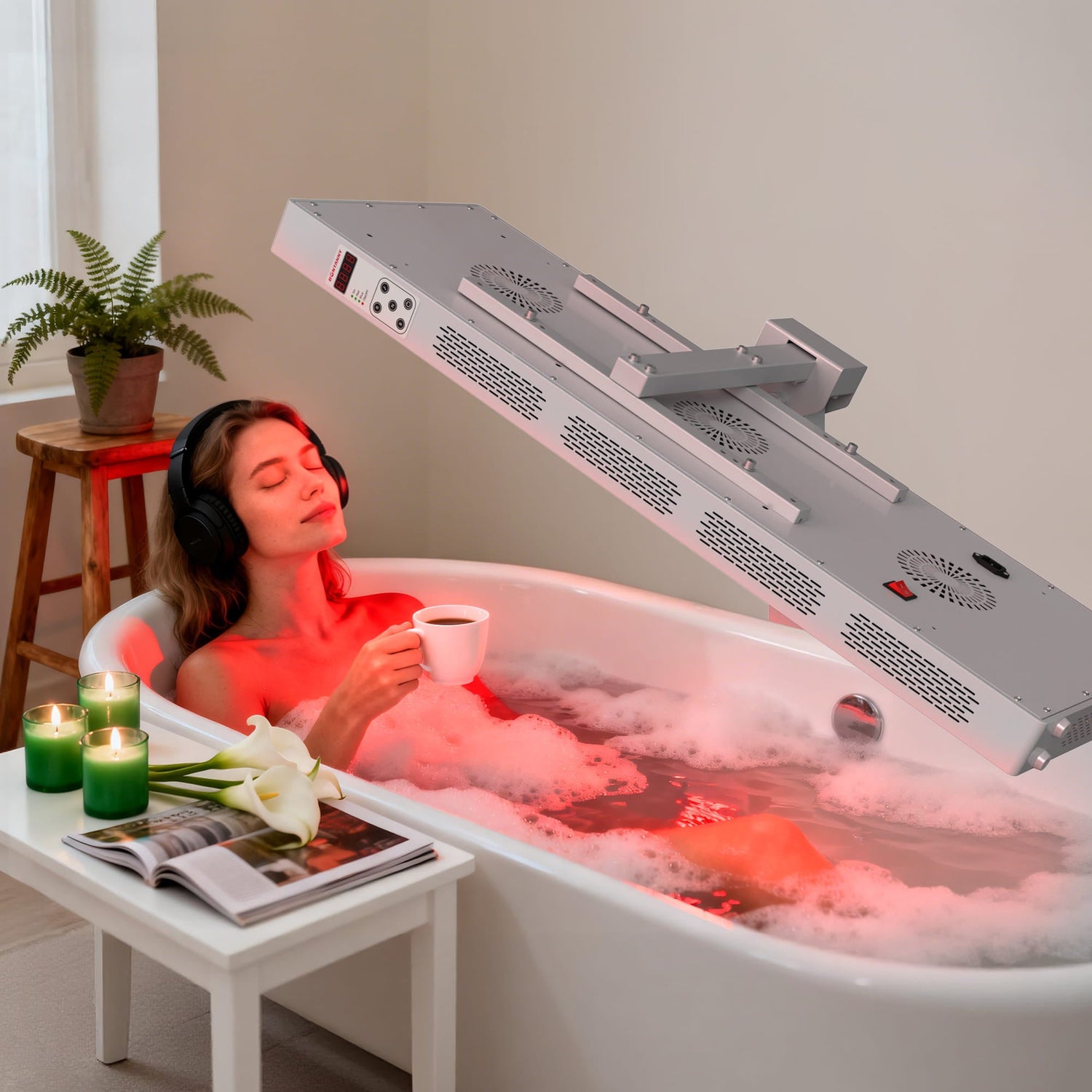
How Does Red Light Therapy Work?
Red light therapy (RLT), also known as photobiomodulation (PBM) or low-level light therapy (LLLT), uses specific wavelengths of red and near-infrared (NIR) light to support normal cellular function. Unlike ultraviolet (UV) light, red and near-infrared light do not tan or burn the skin when used as directed.
Scientists believe the primary target of red light therapy is the mitochondria—the "powerhouses" inside your cells. When certain wavelengths of light are absorbed, they may help cells produce energy more efficiently and support normal biological processes.
What Happens During Red Light Therapy?
When you stand or sit in front of a red light therapy panel, millions of photons enter your skin and are absorbed by cells.
The process can be simplified into four steps:
1. Light Penetrates the Body
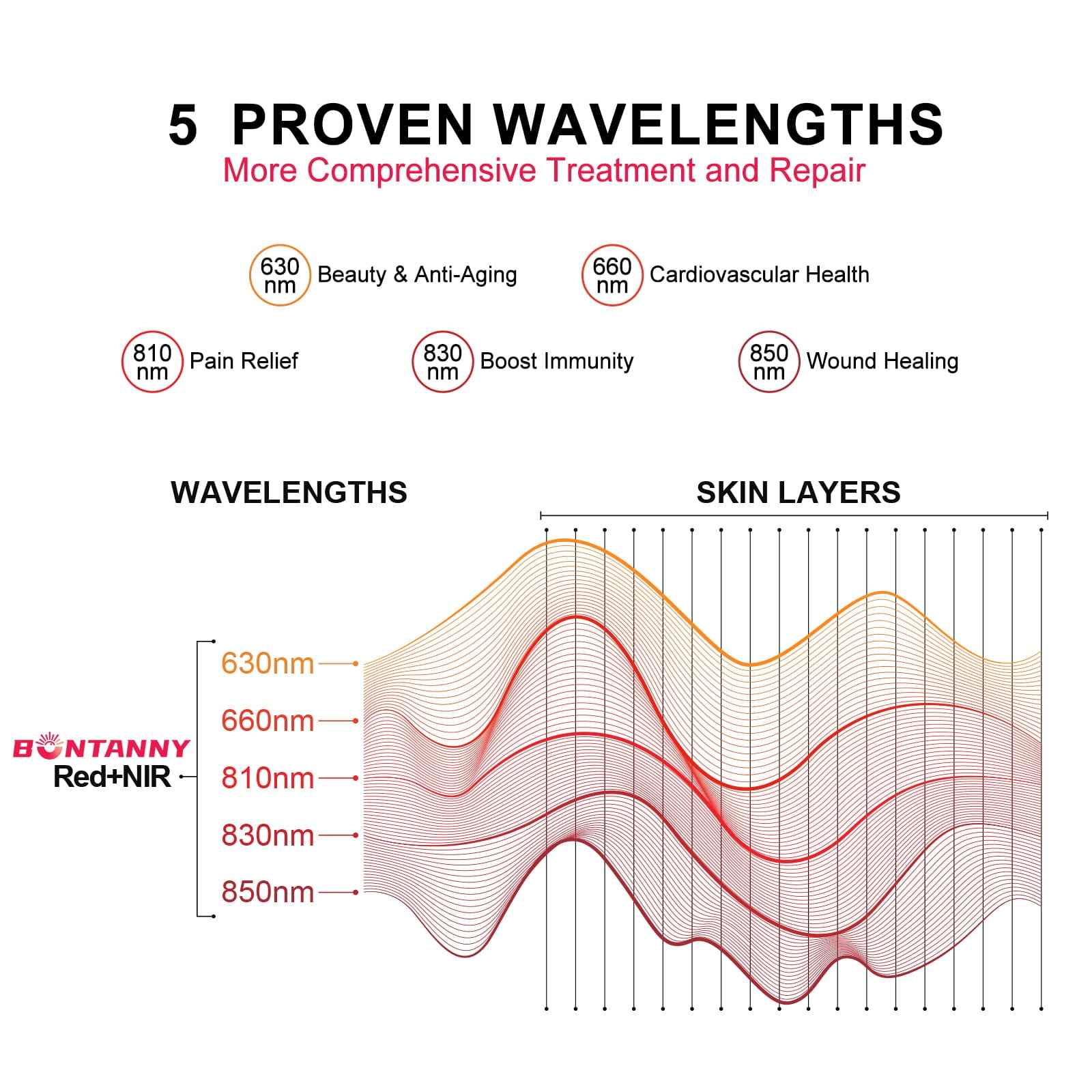
Different wavelengths reach different tissue depths.
| Wavelength | Typical Target |
|---|---|
| 630–660 nm | Surface skin |
| 810–850 nm | Muscles and joints |
| 1060 nm | Deeper soft tissues |
Red light primarily affects the skin, while near-infrared light penetrates deeper because it is less absorbed by skin pigments.
2. Mitochondria Absorb the Light
Inside almost every cell are mitochondria, which produce ATP (adenosine triphosphate)—the body's primary energy source.
A key molecule in the mitochondria, cytochrome c oxidase, is thought to absorb red and near-infrared light. This may improve mitochondrial function and support ATP production.
3. Cells Produce More Energy
When mitochondrial function is supported, cells may:
- Produce ATP more efficiently
- Better support normal repair processes
- Maintain healthy cellular metabolism
- Respond more effectively to everyday physical stress
This is one reason red light therapy is being studied for recovery, skin health, and overall wellness.
4. Cellular Signaling Is Influenced
Research suggests photobiomodulation may also influence cellular signaling pathways involved in:
- Healthy inflammatory responses
- Blood flow and microcirculation
- Collagen production in the skin
- Oxidative stress balance
These biological effects are still being actively studied, and the strength of evidence varies depending on the specific health application.
Why Are Different Wavelengths Used?
Not all light penetrates the body the same way.
630 nm
- Primarily reaches the outer skin
- Often used in cosmetic skincare applications
660 nm
- One of the most extensively studied red-light wavelengths
- Commonly used to support skin appearance and collagen production
810 nm
- Penetrates deeper than visible red light
- Frequently studied for muscle and nerve tissue
830 nm
- Often used in research on recovery and tissue support
850 nm
- One of the most common near-infrared wavelengths
- Popular for muscles, joints, and full-body wellness
1060 nm
- Penetrates deeper than 850 nm
- An emerging wavelength that researchers are investigating for deeper tissues
Devices that combine multiple wavelengths are designed to deliver light to tissues at different depths rather than relying on a single wavelength.
What Conditions Is Red Light Therapy Being Studied For?
Researchers are investigating red light therapy for a variety of applications, including:
- Skin rejuvenation
- Fine lines and wrinkles
- Acne
- Muscle recovery after exercise
- Joint discomfort
- Temporary pain relief
- Tendon recovery
- Hair growth
- Sleep and circadian rhythm support
Some uses—such as improving certain aspects of skin appearance—have stronger clinical evidence than others. For many other applications, research is promising but still evolving.
Does Red Light Therapy Work Immediately?
Red light therapy is not typically an instant treatment.
Many people use it consistently for several weeks before noticing changes, depending on the goal.
Typical wellness routines include:
- 10–20 minutes per session
- 3–7 sessions per week
- Maintaining a consistent schedule over time
The ideal treatment plan depends on the device, irradiance, treatment distance, and individual goals.
Is Red Light Therapy Safe?
When used according to the manufacturer's instructions, red light therapy has generally been well tolerated in clinical studies.
To use it safely:
- Follow the recommended treatment time.
- Maintain the recommended distance from the device.
- Use appropriate eye protection if advised by the manufacturer.
- Consult a healthcare professional if you are pregnant, have a photosensitive condition, or are taking medications that increase light sensitivity.
Frequently Asked Questions
Can red light therapy burn the skin?
Red light therapy panels generate far less heat than tanning beds or infrared saunas. When used as directed, they are generally not intended to burn the skin.
Why can't I see the infrared light?
Near-infrared wavelengths (such as 810, 830, 850, and 1060 nm) are largely invisible to the human eye, even though the LEDs are emitting light.
Is more power always better?
Not necessarily. Effective treatment depends on a combination of irradiance, wavelength, distance, treatment time, and consistency—not simply higher power output.
Key Takeaways
- Red light therapy works by delivering red and near-infrared light that is absorbed by cells.
- Mitochondria are believed to be the primary target, helping support ATP production and normal cellular function.
- Different wavelengths reach different tissue depths, making multi-wavelength devices suitable for a range of wellness goals.
- Research supports some applications more strongly than others, and ongoing studies continue to expand our understanding of photobiomodulation.
- Consistent use over time is generally more important than long or infrequent sessions.




Leave a comment
This site is protected by hCaptcha and the hCaptcha Privacy Policy and Terms of Service apply.